Warehouses Aren’t One-Size-Fits-All: Why Tailored Ergonomics Matters

I recently had a conversation with a warehouse associate that truly highlighted a critical point: not all warehouses are created equal. He observed that new hires often bring habits from previous warehouse roles that simply aren’t suitable for their current environment. And he’s right!

Many people don’t realize the sheer diversity within the warehousing world. From public warehouses serving multiple businesses to private, company-specific facilities, and specialized distribution or e-commerce fulfillment centers focused on rapid turnover, each operates uniquely. Then there are cold storage units for perishables, climate-controlled spaces for sensitive goods, and even GMP-compliant warehouses with strict hygiene protocols, like those for pharmaceuticals or food.

While every warehouse involves material handling, the ergonomic needs and risks vary drastically based on the items, processes, and environment. For instance, a GMP warehouse might have unique handling requirements, like preventing wood pallets from entering sterile areas, which adds specific physical demands. The methods for storing, retrieving, and picking items also differ greatly based on item size and movement frequency.

Given this variability, a generic approach to ergonomics simply won’t cut it. To truly reduce musculoskeletal injuries in warehouses, we need:

  • Accurate Physical Demands Assessments: Objectively define the postural and physical demands of specific warehouse roles.
  • Tailored Manual Material Handling Programs: Customize training for new hires to address the unique needs of their specific warehouse.
  • Ergonomic Evaluations of Warehouse Spaces: Assess design and work processes to ensure they are ergonomically sound, recognizing that equipment suitable for one warehouse may be inappropriate for another.

Does your warehouse proactively tailor its ergonomic strategies to its unique demands? Let’s connect and discuss how a customized approach can protect your workforce and boost efficiency!

The Importance of Perspective in Workplace Demands

There are several things that make the process of going onsite to help tell the stories of how people do their jobs fun. I love to get to talk to people and have them teach me about what they do and I love to find out what brought them to that job. I enjoy looking and digging into the physical and postural demands of the position, measuring them, and being able to convey them back in a way that is useful to physicians, nurses, and physical therapists to rehab an injured employee and help them return to work.

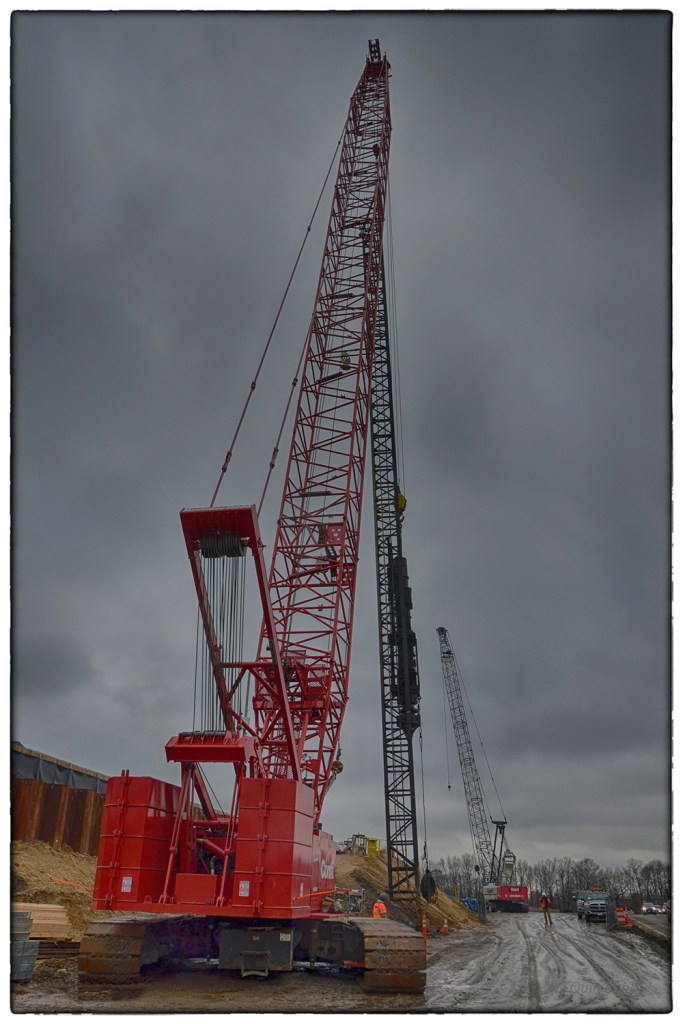
A crane is driving 50 ton pilings for a tunnel at the interchange of Rt. 295/I-42/I-76 in Camden County, NJ.

But, one of my hobbies is photography. I love that I can use my hobby at work to help tell the story. Sometimes, words can not convey the environment that a task is performed in or the posture a worker has to adopt to complete the task. They old saw “a picture says a 1,000 words” is definitely true when it comes to photography incorporated into a job description. It can help a clinician better imagine the task as performed in the environment. For a physical therapist, it may help them pick a better exercise to mimic the task or for a physician, it may help them to better understand the needed strength or range of motion for the task.

That being said, worksite photograph can sometimes make matters worse if the photo does not tell an accurate story of the action or environment being depicted. The perspective that a photo is taken from can distort the viewer’s perception of where a task is performed at or can make the height at which a task is performed looked less than or greater than it actually is. If the photograph distorts the task or the environment, it can do an injustice to the worker or the clinicians as the return to work process is engaged.

The Reality

The photograph at the top of this blog was taken when we were leaving the worksite where laborers were building a new interchange where three highways merge together. The dockworkers who were operating the crane were installing 50 ton pilings that would eventually support the roof of a tunnel. When I took this image, we were in our vehicle and on the actual highway that was still in operation but below the job site. It looks as if the crane is precipitously close to an inclined surface where backing up a little bit could be disastrous.

In reality, there was a significant area of operational surface around the crane. That surface was also pretty muddy as we had several hours of solid rain prior to our visit. That mud is important because it helps remind the treating clinicians that the employees have to be able to “walk in areas of wet and/or uneven terrain” which helps to put the context in place for why the ability to walk and the ability to balance is important within the position. The photograph below looks at the crane from an entirely different perspective and shows how much additional space is around the crane. (For the photographers that may read this, the photograph was shot an effective focal length of 24mm. Even with this wide angle, I had to back up a significant distance to be able to capture the entirety of the crane within the frame.)

One detail to add that the photograph does not – each of my boots weighed about 2 pounds heavier from the nice thick mud that did not want to let go of them. Another reason to keep the legs strong.