Lab work—whether in biosafety cabinets (BSCs), fume hoods or on the bench—can demand long hours of intense precision work. This concentration often masks the physical strain that can lead to chronic musculoskeletal injuries (MSDs) in your most valuable assets.
Lab work doesn’t have to be painful.
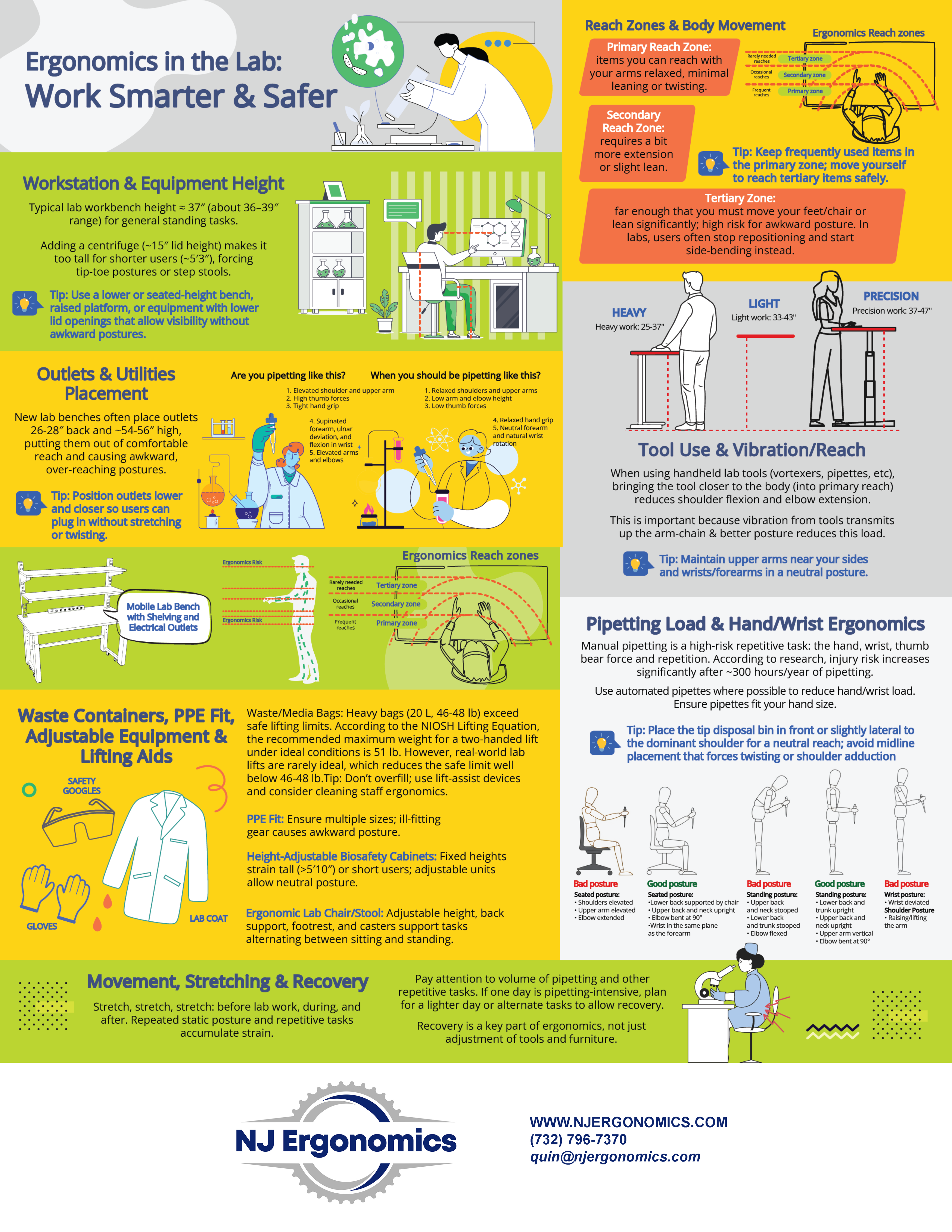
The solution starts with meticulous ergonomic planning:
𝗗𝗲𝘀𝗶𝗴𝗻 & 𝗘𝗾𝘂𝗶𝗽𝗺𝗲𝗻𝘁: Implementing height-adjustable BSCs and ergonomic lab chairs allows you to tailor the core workspace to the user, not just generic standards.
𝗧𝗼𝗼𝗹𝗶𝗻𝗴 & 𝗧𝗲𝗰𝗵𝗻𝗶𝗾𝘂𝗲: Selecting the right tools (e.g., automated pipettes, light-force tools) and ensuring proper reach zones significantly mitigates risk.
𝗪𝗼𝗿𝗸𝗹𝗼𝗮𝗱 𝗠𝗮𝗻𝗮𝗴𝗲𝗺𝗲𝗻𝘁: Lab managers must strategically schedule workloads. Too many consecutive hours of high-repetition tasks, like pipetting, puts technicians squarely in the danger zone for upper extremity overuse injuries.
𝗥𝗲𝗺𝗲𝗺𝗯𝗲𝗿: You must customize. While equipment is designed to accommodate the full range of body sizes (from 5th percentile females to 95th percentile males), the final setup—chair height, BSC height, and primary reach zones—must be tailored to the individual associate. It’s no different than setting up an office workstation.
𝙋𝙧𝙤𝙩𝙚𝙘𝙩 𝙮𝙤𝙪𝙧 𝙩𝙖𝙡𝙚𝙣𝙩, 𝙧𝙚𝙙𝙪𝙘𝙚 𝙧𝙞𝙨𝙠, 𝙖𝙣𝙙 𝙢𝙖𝙭𝙞𝙢𝙞𝙯𝙚 𝙥𝙧𝙚𝙘𝙞𝙨𝙞𝙤𝙣.
Reach out to us at 732-796-7370 or quin@njergonomics.com so we can discuss how to protect your lab staff.
 NJ Ergonomics Blog