Friday Five – 2/17/17

Friday Five – 2/2/17 – NJ Ergonomics Blog

The Friday Five is a set of five links that I have come across this week that pertain to ergonomics, occupational health, safety, human performance, or human factors.  For whatever reason, I found them interesting, but they are provided with minimal or no commentary and are not meant to be endorsement for a given product.

We are now about a month in to the new administration.  Tom Muskin at Safety and Health Magazine takes a look at what might be coming down the pike with changes at OSHA.  Two interesting points are that President Trump is the first president with experience as a business person dealing with OSHA and that we may see a shift from shaming the companies who are found to be in violation to a climate of trying to assist companies to not be in violation.  There are some interesting pros and cons to that shift.

It’s still winter time out but this research paper by Rameez Rameezdeen and Abbas Elmualin in the January 2017 issue of International Journal of Environmental Research and Public Health takes a look at construction site injuries during heat waves.  One of the interesting points is that new workers (less than 1 year in job) and workers over 55 years old have higher injury rates during heat waves.   This is a good time to start planning for the heat of summer and checking protocols for dealing with employee hydration and other heat related protocols.

As was mentioned in this week’s What Not To Do Wednesday, the military becomes a great place to learn lessons.  In addition to accident reviews, they do an amazing amount of research to understand current problems so that they are no longer problems in the future.  This paper by AM Kelley et al in the February 2017 issue of Aerospace Medicine and Human Performance looks at the issue of helicopter aircrews and back pain through the lens of age, gender, airframe, and more.  Only by looking at current complaints can we reduce future complaints.

This might make for one of the more interesting projects for an engineering lab.  Carolyn Summerich, PhD of Ohio State University looked at ergonomics issues affecting tattoo artists.  Not surprisingly, there are some potential musculoskeletal issues lurking in this industry.

In France, a 105 year old man not only set a record a one hour cycling record but also helped to prove that physical performance and ability can be improved at any age.  Dr. Veronique Billat and her colleagues at University of Evry-Val d’Essonne in France followed Robert Marchand’s performance and provided him with a workout program that he followed for two years (from age 103 to age 105).  In testing, they found his VO2 improved 13% and was comparable to that of a 50 year old.  This is something that is going to be revisited in the future on this site.


What Not To Do Wednesday – 2/15/17

Admit it, at least once while driving you’ve had your cell phone or water bottle fall into the driver’s side foot well.  In fact, often the footwear we choose can come loose and get caught in the pedals.  With luck, we are able to clear the obstruction quickly and safely and avoid accidents.

This issue is not limited to automobiles.  Currently, a court martial proceeding in England is looking at a near crash of a Royal Air Force transport plane in 2014 while flying to Afghanistan.

The pilot had allegedly been taking photographs from the flight deck while the co-pilot was getting a cup of tea.  Allegedly, the pilot placed the camera to the left of his seat when he was finished taking pictures.  Prosecutors state that when the pilot moved his seat forward, the seat caught the camera and pushed it into the flight controls and placing the aircraft in an uncontrolled descent that was arrested after the plane had rapidly descended several thousand feet.  Many of the passengers, as well as the co-pilot, were injured when the became pressed against the ceiling due to the rapid descent.

In this particular type of aircraft, the flight controls are placed to the side of the pilot rather than in front of the pilot which sets a potential deadly situation such as what happened.   These types of accidents can occur in both aircraft and other types of vehicles when loose objects get wedged into control surfaces, whether it is a steering control or pedals.

Sometimes it is loose objects that we didn’t secure, but sometimes controls can be inhibited by things that we’ve placed and forgotten to remove.  A USAF C-130 crashed in Jalalabad, Afghanistan in October 2015 due to the case from a pair of night vision goggles being used to hold a control yoke in place.  The case had been set to hold the control yoke in a position that moved rear control surfaces out of the way of crew that had been unloading the plane while the plane was still running.  This particular hack was not a sanctioned method, but one that was used because the task was physically tiresome.  With the fact that the plane was still “hot”, it is possible that the flight crew missed a standard control surface check that would have found the case from the goggles before the plane took off.

The lessons from these two incidents is to make sure that there are not loose items that can move in a way that blocks control surfaces or if an object is placed in a position to hold a control surface for a task, it is removed before further usage.  In this second scenario, full use of check lists can help prevent problems.  Appropriate usage of checklists is a topic that we will be coming back to in the near future.

These lessons are not taken from military accidents to slight the military in any way.  In fact, more lessons from the military will pop in the future in this column for one specific reason.  Among the many things that the military does well, accident review is an area in which it excels.  The main reason for this is so that lessons that have been learned at the costs of lives and equipment need to be taught so that the same accident does not occur a second time.  The fact that they publicly report this information allows all of us to learn the lessons of these accidents.

What Not To Do Wednesday – 2/10/17

I’m posting on Friday because Wednesday was a little busy with weather preparations for Winter Storm Niko.  But, the delay dropped us a great WNTDW topic.

Fortunately, all reports indicate that this cheerleader is ok and does not have significant injuries.

Cheerleading is a demanding and occasionally dangerous activity with a lot of falls.  The what not to do portion hits three times within this video.

Admittedly, all videos of this event have a small break in the video between the fall and the cheerleader being carried out.  However, the first WNTD occurs when a member of the coaching staff chooses to carry the injured cheerleader from the court.  This cheerleader fell on her back and struck her head against the floor.  She should have been checked by the medical staff.

The coaching staff member then chose to run/walk at a very fast pace while carrying someone who has been injured.  Again, with a potential head and back injury, this is a definite WNTD.

Finally, because the person was moving fast while carrying the cheerleader, he was unable to see that his path was not clear which caused him to trip, fall, and drop the injured cheerleader.

Each of these WNTD’s could have been prevented by making sure that all staff members were instructed and trained on emergency procedures in the event of an injury.  With the potential head, neck, and back injuries, this cheerleader should have left the court on a stretcher/backboard – not carried by hand.

The most important Super Bowl viewers

Over the last decade, the issue of concussions in professional football has been addressed in books, movies, lawsuits, and significant coverage in the news media.

While nobody is fully sure of the best way to completely address the issue and minimize the risk of concussions during play and practice, the NFL instituted an important program in 2012 to become more proactive in addressing potential concussion situations during games.  The NFL began placing certified athletic trainers (ATCs) in the stadiums to view games with the purpose of looking at both the in-game contact as well as player behavior after plays and along the sidelines.

The inclusion of these healthcare professionals was a result of a hit to Browns quarterback Colton McCoy during a late season game in  December 2011 after the institution of a video review system for injuries.  The hit that McCoy took was not noticed during the game but after the game.  The NFL realized that a set of eyes were needed to review potential issues in real time.  The ATC spotters observe both the game and video feed from the broadcast coverage in real time to identify plays that may result in concussion or injury whether it is from player to player contact or contact with the ground.  The ATCs then contact either the team medical staff or the unaffiliated neurotruama consultant to advise them of what was observed.  These calls can not be handled by bench staff from the team.  The ATCs also instruct technicians to send the video of the specific incident to the sidelines for medical staff to include in their evaluation of the athlete.  According to the NFL, approximately 10 plays per game initiate this process.  ATC spotters can also initiate a medical timeout.  These timeouts are not charged to either team.

While there are several criteria for ATCs who wish to apply to this program, I think the most interesting are:

  • At least 10 years experience – enough experience to really have an idea of what they are observing
  • Can not have been the Head Trainer for any NFL team previously
  • Can not have been employed by an NFL team in the last 20 years

I think the last two criteria that I mentioned are probably the best at showing a positive intent for this program by the NFL.  These two criteria help to minimize the impact that past relationships with teams and/or players may have on an ATC Spotters observations.

While this is a great program and the NFL appears to have done a great job in keeping the program impartial and they have empowered the ATCs with the authority to stop game play, this only addresses observational, subjective game day issues.  It still does not provide an objective and measured value to the cumulative impacts that occur during the game – or more importantly, the significant hours of practice and seasons of games that comprise a player’s career.

Helmet impact sensors like those from Shockbox may help to provide a more objective dataset to determine the amount of cumulative impacts that a player goes through during the course of games and practices.  The US military has been studying head trauma through the use of helmet sensors since 2007 and began collaborating with the NFL in 2012 to better advance the science and address the issues.

The US Army had been using helmet based sensors in Afghanistan to measure blast pressures during IED events during combat patrols.  The sensors are triggered with forces greater than 150 newtons, which is the equivalent of just under 34 pounds of force.  Not a whole lot of force when compared to the forces of between 447 pounds and 1,066 pounds in boxers when punching.  However, a drawback to the Army/DARPA program was that it was only run in combat zones and did not take into account proximity and cumulative exposure to blast pressures when firing heavy weapons. The program was ended in late 2016.

There is one five year study that was done at University of North Carolina that looked at not just game day impacts but also the hits sustained during practice sessions.  The data that they collected shows some interesting data points.  They found that some impacts that were of significant force did not cause concussions while some lesser impacts that were below “threshold” did cause concussions.  Within these below threshold concussions, they found that the area of the point of impact on the head is just as important as the amount of force.

We still have a lot to learn about the causes and effects of concussions as well as treatment post concussion (as we’ve pointed out in a Friday Five post).  But, we can take notes from the positive aspects of what the NFL has done so far with their ATC Spotter program in being more proactive in dealing with health related “workplace” issues.


Friday Five – 2/2/17

The Friday Five is a set of five links that I have come across this week that pertain to ergonomics, occupational health, safety, human performance, or human factors.  For whatever reason, I found them interesting, but they are provided with minimal or no commentary and are not meant to be endorsement for a given product.

A lot of money and time has been put into exoskeletons for assisting soldiers, laborers, and individuals who have had strokes or spinal cord injuries.  This is an area that I plan on revisiting in future posts.  For now, a company called suitX has introduced a modular line of exoskeletons for assisting with specific work related tasks and body parts.

Whenever there is a change of administrations, regardless of whether there is a change in party, there are revisions to previous rules and regulations.  This National Law Review piece takes a quick look at areas of potential changes at OSHA.

Becker’s Healthcare Review has five great tips for designing an intergenerational workspace in hospital settings.

Not so much ergonomics but a question of productivity and efficiency on the Monday after the Super Bowl.  Kraft Foods is suggesting the day after should be a holiday  with an anticipated 16.5 million workers may call out sick to recover from festivities the day before.  This is an interesting question when talking about presenteeism vs. absenteeism.  How much work is actually lost with people discussing the game and the commercials when they come to work the next day?

When I was taking a tour of our local police department with my son’s Cub Scout den, my son asked the officer who gave the tour about a poster in the squad room.  The poster had a police cruiser that had been in an accident and had a slogan reminding officers that car accidents cause more line of duty deaths than some of the other more media noticed causes.  I found this article with 5 real world tips that police officers can use to make their vehicle safer for today’s tour of duty.


What Not To Do Wednesday – 2/1/17

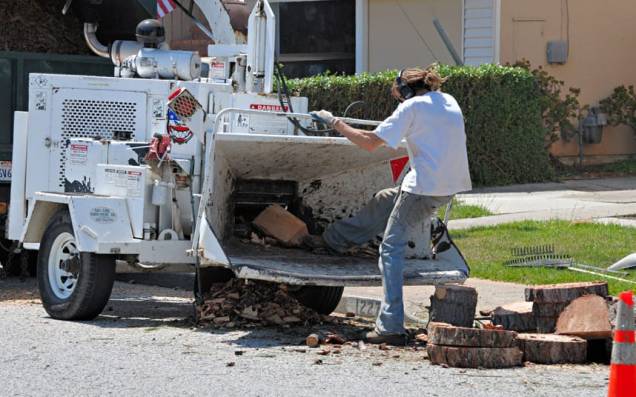
worker trying to kick wood into a chipper in an unsafe and unprotected way (how not to use a wood chipper)
BBW345 worker trying to kick wood into a chipper in an unsafe and unprotected way (how not to use a wood chipper)

It seems like it should be a “no brainer” to not use your feet to help push things into machines that shred materials, but it happens.  Approximately 50% of those injured when using a wood chipper are sucked feet first into the machine.  The Bureau of Labor and Statistics tracks injuries and fatalities for many occupations.  Statistics for the last several years indicate about 100-130 non-fatal injuries occur while operating wood chippers with fatalities typically in the 5 to 10 per year range.

Wood chipper injuries can be reduced with some simple rules:

  • When you are working to clear a clogged chute, make sure that the machine if fully shutdown before opening the machine up.  A worker in Maine was fatally injured when he attempted to open a chipper before it was fully shut down.
  • Make sure to operate chippers in teams of at least two individuals.  These team members should be close enough to monitor each other, in the event that the machine needs to be shutdown.
  • Load smaller pieces on top of larger pieces – or use larger branches to push the shorter branches through the hopper.
  • Put twigs and other small branches directly into the truck instead of running them through the chipper.
  • Stand to the sides (specifically the side with the shutoff controls) of the hopper when feeding materials rather than in front of the hopper.


OSHA Walking-Working Surfaces Final Rule

The final rules changes for OSHA’s Walking and Working Surfaces/Personal Fall Protection System Rules have been put into place.  This OSHA FAQ provides some quick answers to changes in the final publication.

Friday Five – 1/27/17

The Friday Five is a set of five links that I have come across this week that pertain to ergonomics, occupational health, safety, human performance, or human factors.  For whatever reason, I found them interesting, but they are provided with minimal or no commentary and are not meant to be endorsement for a given product.

This article by NHL defenseman Bryce Salvador discusses the changes in both behaviors and attitudes that he had to make following a concussion after being hit in the head with a puck at 90 miles per hour.

Steven Dubner of Freakonomics and Freakonomics radio did a two episode series on the economics of sleep.  It covers a lot of interesting areas that are impacted by the amount and quality of sleep.  While it’s broad in scope, it isn’t a deep dive into all of  the areas.  There’s some brief discussion of safety and productivity/efficiency.  Episode 1 provides an introduction to the issues of sleep and overall economics and Episode 2 looks a little bit more into timing of sleep and quality with a quick discussion with Heather Schofield who is doing some interesting research into the affect of sleep on data entry jobs.

Sometimes job training needs to start before you get the job.  The Kessler Foundation has awarded a grant to the University of Michigan to look at virtual reality based training modules to help youth with disabilities become more confident with their actions when interviewing for a job.  (As a quick disclosure, I used to work for the Kessler Foundation within their research division a long time ago).

Researchers in Canada are beginning to dig deeper into a fairly large set of data on construction workers to determine the differences between injury rates between unionized and non-unionized construction workers.

Besides the science that goes into the ballistic properties of bullet proof vests, there is a lot of ergonomics that goes into determining which vests work better at allowing personnel to be able to accurately and effectively perform job tasks.  Issues looked at include heat generation/dissipation, performance in obstacle courses, and more. Employees and end users should look to make sure that the issued vests are able to suitably perform all aspects of the job.


Friday Five

The Friday Five is a set of five links that I have come across this week that pertain to ergonomics, occupational health, safety, human performance, or human factors.  For whatever reason, I found them interesting, but they are provided without commentary and are not meant to be endorsement for a give product.

Ergonomic recycling containers – the lids are open to all sides allowing for easier access to deposit recyclables

American Airlines flight staff seem to be having health issues since their new uniforms were put into service.

Ergonomic mice and keyboards aren’t only for data entry – it can be the difference between winning and losing for gamers.

There are a lot of options for ergonomic keyboards.  This site reviews 10 of them.

While there have been reductions in sprains, strains, and other MSDs in many occupations, construction workers still have high rates of MSDs.